What almond nails are
Almond nails explained: how the tapered oval tip works, how the shape compares with square nails, and what length an almond nail needs to look right.
Contents
- The almond shape in plain terms
- How almond nails differ from square nails
- Why almond nail length matters
- Shape, strength and the narrow tip
- Choosing colour for a tapered tip
- Matching almond nails to your hands
- Asking for almond nails at an appointment
- Questions about almond nails
- What are almond nails exactly?
- Do almond nails need to be long?
- How are almond nails different from square nails?
- Are almond nails weaker at the tip?
- What colors suit almond nails?
- What should I ask for at a salon?
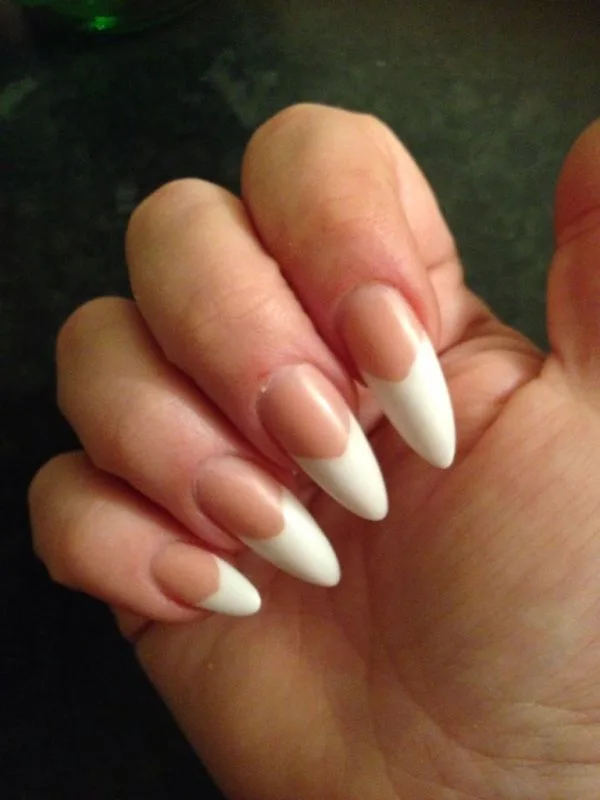
Almond nails are a nail shape with a narrow, tapered tip and softly rounded point, wider at the base and slimmer toward the end. The tip follows an oval curve rather than a flat edge, and the free edge comes to a gentle point at the center. The shape gets its name from the outline of an almond, and the look depends on length as much as on the curve.
- Almond nails narrow toward a soft point, with sides that curve in from a wider base.
- The shape needs free edge to show its curve, so very short nails cannot hold the outline.
- Square nails have a flat, straight tip, which is the opposite of the almond taper.
- A longer almond shape bends more easily, so the tip needs enough strength to hold.
- Color and design read differently on a tapered tip, because the narrow end draws the eye.
The almond shape in plain terms
An almond nail shape has a base as wide as the natural nail and sides that taper inward toward a rounded point. The free edge forms a smooth oval curve instead of a straight line. The overall outline is wider at the cuticle area and narrow at the tip, which gives the shape its name.
The tapered oval tip is the defining feature of an almond nail. Both sides pull inward at the same rate, and the highest point of the curve sits at the center of the finger. A nail with one side straighter than the other loses the balanced almond outline.
The shape is a silhouette, not a product or a treatment. A nail technician files the sidewalls and the free edge to reach the outline, and the same shape can be done on natural nails or on extensions. The definition lives in the curve, so the filing angle matters more than the material underneath.
How almond nails differ from square nails
Square nails keep a flat tip with straight side edges, while almond nails draw the sides in to a soft point. The contrast is sharpest at the free edge, where a square nail runs level and an almond nail rises into a curve. Both shapes can start from the same nail length before filing.
Square nails protect the tip with a wide, blunt edge, and the corners take the wear. Almond nails put the narrowest part at the center of the tip, which changes where stress lands on the free edge. The taper shapes the finger visually, while the flat edge of a square nail keeps it looking wider and shorter.
The choice between them comes down to the outline you want and how you use your hands. A square shape holds a crisp line and suits geometric designs with straight edges. Almond softens the hand and gives rounded artwork a natural frame.
| Feature | Almond | Square |
|---|---|---|
| Free edge | Rounded soft point | Flat straight line |
| Sides | Tapered inward | Straight and parallel |
| Visual effect | Lengthens the finger | Widens the tip |
| Design fit | Curves and gradients | Straight lines and blocks |
Why almond nail length matters
Almond nail length needs enough free edge to contain the taper without pinching the nail bed. A little length past the fingertip lets the sides curve in gradually and keeps the point smooth. Very short nails leave no room for that curve, so the shape flattens into a plain oval.
Long almond nails show the widest range of taper, and the curve can run gently over the whole free edge. Extra length also changes how the tip behaves under pressure, because a narrow point bends where a wider edge would hold. A technician can judge how much length the natural nail can carry before the tip needs reinforcing.
Length is a choice about proportion rather than a rule. A medium free edge keeps the shape readable and still suits daily tasks with hands. Someone who prefers short nails can keep an almond outline and accept a softer, less pointed tip.
Shape, strength and the narrow tip
The narrow tip of an almond nail concentrates stress at the point, which is the part most likely to chip or split. Files shape the outline, but the structure under the free edge decides how the tip holds. A tip that is too thin under the curve will flex and crack sooner.
A trained nail technician can build an apex, the thicker zone over the stress area, to support the taper. That structure matters more on almond nails than on a blunt square shape, because the point carries the load. Filing the sides too thin makes the whole free edge weak, whatever the length.
Natural nails can wear an almond shape, but the tip needs gentle care around edges and openings. A nail that cracks at the point may need shortening before the crack travels down the sidewall. Where the natural nail is fragile or the extension is lifting, a professional check protects both the nail and the finger.
Choosing colour for a tapered tip
Colour on an almond nail follows the taper, so the narrow tip becomes the visual focus of the hand. A single shade with a satin or glossy finish shows the curve cleanly and reads well at any length. The shape already carries movement, which means a plain color never looks empty on it.
A gradient from a deeper tone at the base to a lighter tone at the tip echoes the almond outline. French styles with a curved smile line suit the shape, while a straight-edged French tip fights the taper. Metallic finishes catch light along the curve and emphasize the point.
Nail art placement works with the anatomy of the shape. A design centered near the tip pulls attention forward, and a design at the base frames the cuticle instead. Keep small details away from the very point, where wear and chipping happen first.
Matching almond nails to your hands
Almond nails soften a wide nail bed and draw the eye along the finger. The taper narrows the visible width at the tip and makes the hand look longer than a blunt edge does. Short fingers gain length from the curve, and long fingers carry a more pointed tip without looking severe.
The amount of taper changes the effect. A gentle curve keeps the nail close to an oval and suits hands that want a subtle outline. A sharper point reads as a stronger style choice and needs more length to stay balanced. Choosing the taper is a separate decision from choosing the color.
Consider how you use your hands before settling the tip. Typing, gardening and handling tools all press on the free edge, and a narrow point feels that pressure. A slightly softer almond keeps the shape while asking less of the tip during daily tasks.
Asking for almond nails at an appointment
A clear request names the almond shape and the taper you want, because almond sits between oval and pointed styles. Bring an image of the outline rather than only the name, so the technician can see the curve you have in mind. Say whether the sides should pull in gently or sharply.
Discuss length before filing begins, since the final shape depends on how much free edge stays. Mention any weak spots, splits or lifting so the technician can plan the structure around them. If you want nail art, describe where it should sit on the tapered tip.
Check the outline from the side as well as from above, because an almond nail needs a smooth arch as well as a curved tip. Ask for changes before the final finish is applied. A technician can adjust the taper while there is still length to remove.
Questions about almond nails
What are almond nails exactly?
Almond nails are a nail shape with tapered sides and a softly rounded point at the center of the tip. The outline is wider at the base and narrows toward the end, like the shape of an almond. The look comes from filing, and it can be done on natural nails or extensions.
Do almond nails need to be long?
Almond nails need some free edge past the fingertip to show the taper, so very short nails cannot hold a true almond point. A medium length carries the shape well, and extra length allows a sharper curve. Short nails can still have a soft almond outline with a gentler tip.
How are almond nails different from square nails?
Almond nails taper to a rounded point, while square nails keep a flat tip with straight sides. The square edge looks wider and stronger at the tip, and the almond curve makes the finger look longer. Designs with straight lines suit square nails, and curved designs suit almond nails.
Are almond nails weaker at the tip?
Almond nails do concentrate stress at the narrow point, which is the part most likely to chip. The tip holds better when the structure under the free edge is built correctly by a technician. Natural almond nails need gentle handling around edges and openings.
What colors suit almond nails?
Almond nails suit a single shade in a glossy or satin finish, because the color follows the taper and shows the curve. Gradients that run from a deeper base to a lighter tip echo the outline. Curved French tips work with the shape, while straight-edged designs fight the taper.
What should I ask for at a salon?
Ask for the almond shape and describe how sharp you want the taper, then show an image of the outline you like. Agree on length before filing starts, since the final shape depends on the free edge left behind. Mention any splits or lifting so the technician can plan around them.